
One Small Cheer for the Leader as Hero
A reflection on the rise of post-heroic leadership theory, and why there is still sometimes a place for the leader as hero.
We live in a world where the current definitions of leadership have a post-heroic connotation. The claim is that it is possible to be a leader without being a hero.
The argument goes that heroic leaders are viewed as being all-powerful within the organisation, and that this position disempowers colleagues and dilutes the value of employee engagement. Organisational theory reasonably asks how much value business "hero" types place in their fellow managers and staff. Increasingly, effective leadership styles are seen as much less hierarchical, promoting trust and respect for all. Today's business leaders know that without the concerted actions of everyone, they cannot deliver results and be great leaders. Hence the oft quoted phrase, "there is no I in team."
There is little doubt that much of the criticism aimed at the leader as hero model is valid. Times change, and business practices evolve with them. A glance back through business history literature makes interesting reading. After FW Taylor, we have what might be termed the "born to lead" model. Leadership studies during the first half of the 20th century focused on what has been referred to as great man and trait theories. The great man theory of leadership proposes that certain men, and back then it was only men who were viewed as leaders, are born to lead, and that when crises arise these men step up to take their natural place. During the Second World War, Churchill exemplified this typology.
These "natural leaders" were believed to be born with the essential characteristics for leadership. The search was on for the right combination of characteristics that would embody effective leadership. A central characteristic identified was charismatic leadership, a phrase coined by Max Weber, who argued that a special personality characteristic gives a person exceptional powers that result in them being treated as a leader. The traits of charismatic leadership were further developed during the 1970s, with the personal characteristics of this type of leader seen as: dominant, influencing others, self-confident, and having a strong sense of one's own moral values.
Some 30-plus years ago, as a young professional on the first rungs of my career, I can recall reading the best selling biography of the US car manufacturing figure Lee Iacocca. I wound up thinking, "this guy is like a superhero of the business world." While some of his messages were inspirational, others were deflating, and I got to thinking I would never be smart enough to be a leader.
Gradually, however, during my working life, as I climbed the managerial tree and avidly read about emerging leadership trends, I began to increasingly view the world through post-heroic goggles. I found that a leader's primary roles are ones where, mostly, heroic traits are not required, for example acting as a barometer of the organisation's vision and then ensuring the performance outcomes needed to deliver it. I discovered that the old hero-type models were outdated, and that the aim of modern, post-heroic leaders is to draw solutions out of team members rather than force their own solutions onto the organisation.
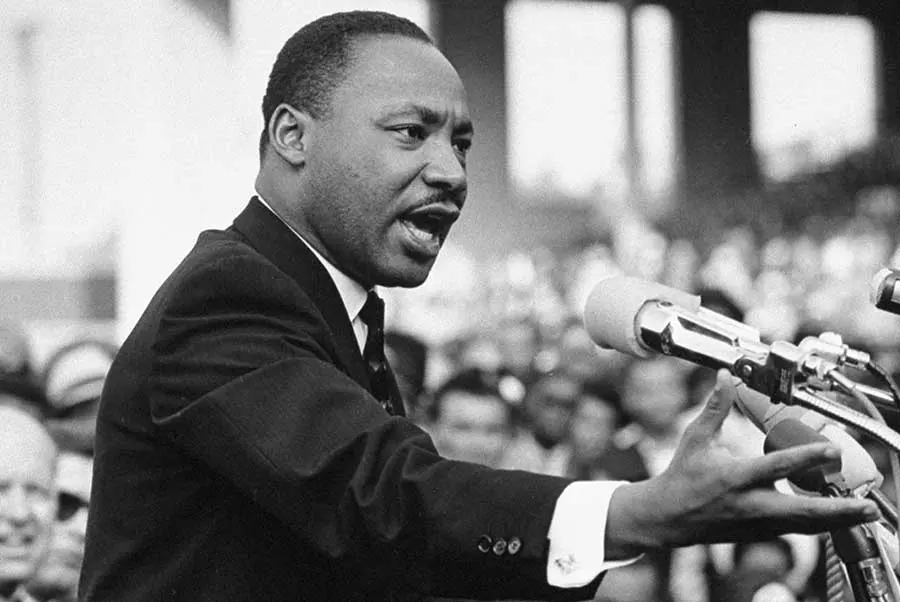
So it's clear cut, then: there is no role for the leader as hero. Well, not quite. Sometimes there is a role for a hero. I would argue that Martin Luther King is a case in point. As the leader of the Civil Rights Movement to end racial discrimination in America, and a leading spokesperson for nonviolent methods of achieving social change, he exhibited traits of the leader as hero. His eloquence as a speaker and his personal charisma, combined with a deeply rooted determination to establish equality among all races despite personal risk, won him a worldwide following, for which he was awarded the Nobel Peace Prize. More importantly, Dr King's leader as hero role changed history.
Closer to my own working life in local government in the UK, I look to some of the highly publicised health and safety failures that have contributed to loss of life. I cannot help but wonder if a little bit of the leader as hero would have helped prevent disasters, by leaders personally driving home the, often unglamorous, message across the organisation that nothing is more important, not finances, not performance, not customer satisfaction, than health and safety.
My take on leadership is this: throughout modern history, leadership styles have evolved and improved, moving from autocratic to democratic. This has clearly been a good thing. However, emerging leadership theory and practice would do well to remember that every generation has some ideas worth holding on to.
William J Taylor MBE
Will Taylor is a former chief executive of two UK councils and has worked previously serving both private and public sector clients across Australia. He now works globally as an independent consultant.