
From Chief HR Officer to CEO
Why so few HR directors make the leap to CEO, and the strategic skills HR professionals can build to put themselves in contention for the top job.
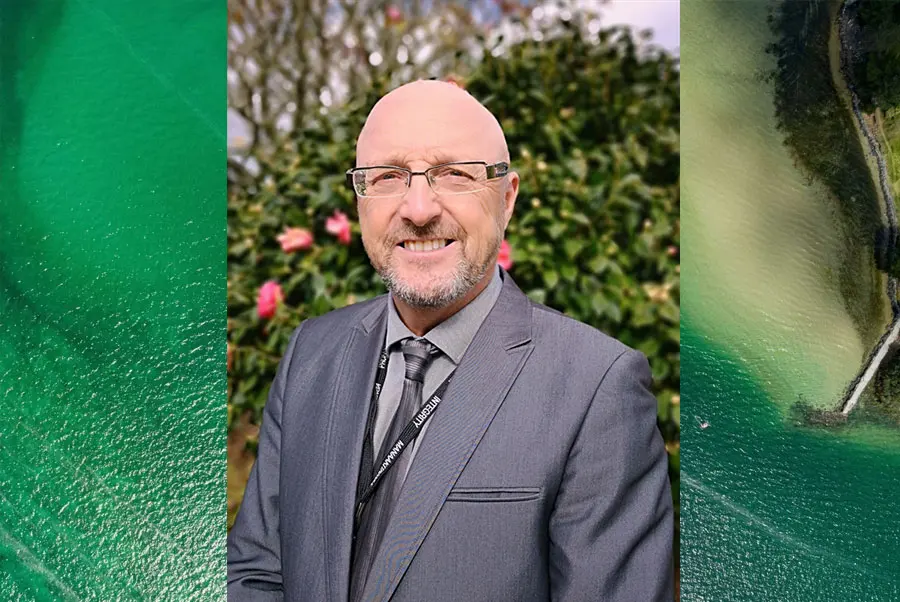
In my 30 years as an executive director, non-executive director, CEO and management consultant, I have seen very few HR directors ascend to the top of the organisation. Other professions, mainly finance, tend to take the lion's share. Few HR professionals become CEOs, and the more common outcome is for the best HR executives to move on to a similar job in a larger organisation. This article looks at why more HR stars don't become CEOs, and how more might succeed in future.
My own experience is supported by research in Management Today magazine: "given that HR leaders combine specialist people skills with broader commercial experience, you would think that they make ideal candidates for the role. Yet few become CEOs."
As an HR professional myself, I am one of a relatively small number of CEOs who took the route to the top from HR, and I have sought to advise my HR colleagues who feel they are "always a bridesmaid, never a bride." My own impression is that decision makers, in our case mayors and councillors, aren't as exposed to the internal workings of HR, and often see the function as necessary but not critical to the corporate mosaic of the council.
In response to the question of why more top HR executives don't become CEOs, the old clichés spring to mind: "HR isn't strategic enough" or "HR doesn't have enough broad based business acumen." I personally don't buy this line of reasoning at all. In fact, in recent decades the HR function has become more integral to business success.
Key strategic areas
Developing talent strategy is viewed as a prime determinant of corporate success, with intellectual and human capital increasingly important. US academic Jim Collins puts it this way: "get the right people on the bus, first who, then what." In other words, get the right people in the right places, the right talent strategy, the right team dynamics, the right culture, and you have strong foundations for success. It is Chief HR Officers who are at the heart of creating and delivering an organisation's talent strategy.
Acquiring soft skills. Modern corporate leaders must demonstrate the full gamut of soft skills, including empathy, outstanding communication and the ability to deliver constructively critical feedback. These are attributes that have traditionally been the cornerstone of the HR function.
Creating corporate culture. Organisational success depends almost as much on how things get done as on what gets done. Building the foundations for an effective corporate culture is very much within the experience and skill set of HR professionals.
Promoting diversity and equality. Legal requirements and modern corporate ethics place significant priority on ensuring equality is properly prioritised. The HR profession has historically had a proud record of being at the forefront of this agenda.
Recommendations for HR professionals
Think like a corporate animal. HR professionals should view themselves as business managers and continually ask how they can add value to the council's objectives. This means thinking less narrowly about HR as a personnel function, and more as a key player in enabling the organisation to reach its corporate goals.
Seek to ensure HR reports directly to the CEO and sits at the top table. As a CEO, I have always had the HR manager reporting directly to me. I recall several finance and corporate services directors resenting my "take over" of "their" HR function. But for me, the CEO's primary leadership role is about directing change management within the organisation, and HR is integral to this. I also believe the Chief HR Officer should have a place at the management team table. HR needs to demonstrate to CEOs that it is genuinely indispensable, and that its reach extends well beyond traditional personnel management.
Get qualified and experienced. HR professionals are usually well qualified within their discipline, but how many go on to study for an MBA? A business degree provides knowledge of the main corporate disciplines. HR professionals should be among the first to volunteer for cross discipline project teams, both to pick up a broader range of skills by working alongside secondees from other professional backgrounds, and to get themselves noticed as corporate team players.
Tough as it is to reach the top, the future is far from bleak for HR directors. Times really are changing. Slowly but surely, the perception of the HR department as a largely administrative, back office function is being altered. Fuller and Ulrich, writing in Harvard Business Review, argue there has in recent years been a "dramatic change with HR chiefs increasingly reporting directly to the CEO, serving as the CEO's key adviser, and making frequent presentations to the board."
The Fuller and Ulrich research concludes that "the executive whose traits were most similar to those of the CEO was the Chief HR Officer. This finding is very counterintuitive, nobody would have predicted it." So the good news is that HR directors have much of the raw material needed to get to the top. However, I believe additional broadening of the skill base is required, in areas such as finance, marketing and corporate strategy. As Fuller and Ulrich conclude, "the challenge for CHROs is to acquire sufficient technical and financial skills, in early education and in career steps along the way, if succession to CEO is a desired outcome."
Over the course of my career, I have concluded that leadership revolves around change management: transforming organisations and continually looking for new and better ways of improving service quality and reducing operating costs. For transformation to be sustainable, we need leaders with skill sets that so many able HR chief officers already possess. It is my hope that more HR professionals will take up the challenge of becoming a CEO.
The future of HR may well be as a springboard to director and, ultimately, CEO roles. For this to happen, HR professionals need to display their aptitude for talent and culture management, a skill set that separates them from other candidates. That said, these attributes are only part of what makes an effective CEO. HR professionals also need to demonstrate their corporate credentials: an MBA, secondments into corporate roles, and job rotations undertaken. These are the kinds of commitments that provide evidence to a council interview panel that an HR director is ready to take on the role of CEO.
Will Taylor is currently GM Corporate at Far North District Council, New Zealand. By profession he is a writer, consultant and public speaker, and a former HR director, council CEO and management consultant with extensive local government experience in the UK, Australia and South East Asia.